How Deaf Youth Can Build Careers in Tech: Skills, Jobs, and Real Paths
January 1, 1970
In Nigeria and across Africa, tech is no longer a “rich person’s dream” — it’s a real, open door that more and more Deaf young people are walking through. Being Deaf does not mean you cannot code, design great apps, analyse data, or even launch your own tech startup. In fact, many tech jobs rely on written communication, visual thinking, and problem-solving — skills that Deaf youth often develop naturally through sign language and lived experience.
This post breaks down practical steps Deaf youth can take to enter tech: which careers fit best, how to get the right skills, how to find jobs or freelance work, and how to show employers that they bring irreplaceable value.
Why Tech is a Great Fit for Deaf Youth
Technology is one of the most inclusive sectors because most of the work is done through text, code, and visuals, not spoken words. In tech, what matters most is:
- Can you write clean, working code?
- Can you design a user-friendly interface?
- Can you solve problems and think logically?
These are skills that Deaf people can develop fully, regardless of hearing ability. Many tech roles are remote, flexible, and rely on tools like email, chat (Slack, WhatsApp), and video calls with captions or sign language interpreters — all of which can be adapted to fit Deaf communication styles.
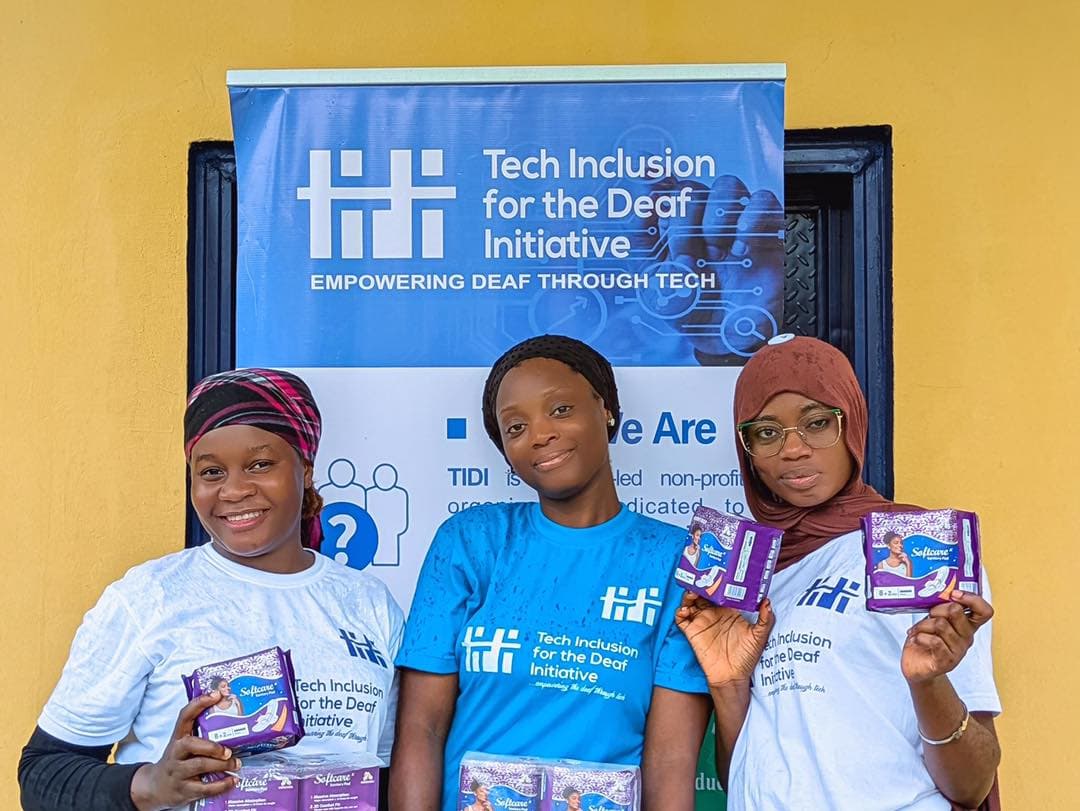
In Nigeria, we’ve seen this shift clearly: programs like Tech Inclusion for the deaf Initiative are training Deaf youth in coding graphic design, UI/UX, data analytics and Artificial Intelligence (AI), and placing them into real jobs. Their stories prove that tech is a level playing field when Deaf youth are given the right tools and support.
Best Tech Careers for Deaf Youth
Not every tech job is remote, but many of them are. Here are some high-demand, future-proof roles that are especially suitable for Deaf youth:
1. Software & Web Development
- What it involves: Writing code to build apps, websites, and software tools.
- Why it fits: Almost all communication is through text (code, comments, documentation, emails, chat).
- Popular languages: JavaScript, Python, PHP, HTML/CSS.
- Entry paths: Learn through structured courses, boot camps for Deaf learners, or no‑code tools before moving to coding.
In Nigeria, many startups and tech companies hire front‑end and back‑end developers, especially for web and mobile apps. Deaf youth can start by building small projects (e.g., a school timetable app, a local business website) and showcase them in a portfolio.
2. Data Analysis & Visualization
- What it involves: Cleaning, analysing, and presenting data using tools like Excel, Power BI, or Python.
- Why it fits: Data is visual and logical; communication is through reports, dashboards, and written explanations.
- Entry paths: Start with Excel, then Power BI/Tableau, then move into data analysis with Python or SQL.
Programs like Deaf‑in‑Tech in Abuja train Deaf youth in these exact skills, and many of their graduates now work as data analysts in NGOs and tech companies.
3. UX/UI Design & Graphic Design
- What it involves: Designing how apps and websites look and feel, creating logos, social media graphics, videos, and presentations.
- Why it fits: Creativity and visual communication are central; most collaboration happens via chat, email, and design tools like Figma.
- Entry paths: Learn design tools (Figma, Canva, Adobe suite), build a portfolio of sample projects, and join design communities.
For Deaf youth, this is a strong entry point into tech because it combines creativity with digital tools, and many agencies and companies hire designers for remote work.
4. Digital Marketing & Content Creation
- What it involves: Managing social media, writing blogs, running ads (SEO, Facebook, Instagram), and creating videos with captions.
- Why it fits: Communication is largely written and visual; Deaf youth can leverage sign language and subtitles to create engaging content.
- Entry paths: Start a small blog or social media page, learn free tools (Google Ads, Meta Ads, SEO tools), and offer services to local businesses.
Many Deaf creators on TikTok and YouTube in Nigeria are already building followings and earning income this way — that’s the same foundation for a digital marketing career.
How to Build the Right Tech Skills
Even if you’re starting from zero, here’s a step-by-step approach to build skills that employers value:
1. Start with What You Can See
- If you’re new to computers, focus on understanding the basics: turning on a device, using a keyboard, browsing the web, and using apps.
- Look for training programs that teach in sign language, with visual explanations (like Deaf‑in‑Tech or TIDI programs).
- Use free or low‑cost resources that are accessible (text, video with captions, sign‑language tutorials).
Key areas to learn:
- Computer basics (files, folders, internet)
- Office tools (Word, Excel, PowerPoint)
- Email and messaging (WhatsApp, Gmail, Teams)
2. Pick a Tech Path
Choose one area early and focus deeply for 6–12 months:
- Coding path: Start with HTML, CSS, and JavaScript (web development), then move into Python or PHP.
- Data path: Master Excel, then learn Power BI or Google Sheets with data analysis.
- Design path: Learn Figma, Canva, and basic graphic design principles.
- Digital marketing path: Learn social media, content writing, and basic SEO/ads.
Use free platforms like:
- Freecodecamp (free coding courses)
- Microsoft Learn (free data and cloud courses)
- Google Digital Skills (for beginners in digital marketing)
3. Build a Strong Portfolio
Employers want to see what you can do, not just what you’ve studied. Create 3–5 projects like:
- A simple website for a school, club, or local business
- A data dashboard for school results or community health
- A design portfolio (social media templates, logos, posters)
- A series of blog posts or social media content for a niche topic
Use platforms like GitHub, Notion, or free websites to host and showcase your work.
4. Learn “Work Skills” Alongside Tech
Tech alone is not enough. Deaf youth should also build:
- Communication skills: How to write professional emails, explain your work clearly in text, and present projects.
- Collaboration skills: How to use tools like Google Workspace, Trello, or WhatsApp groups for team projects.
- Problem‑solving: How to debug code, research solutions online, and break down big tasks into small steps.
Mentorship programs (from organizations like TIDI or Deaf‑in‑Tech) are golden here because Deaf mentors can guide both technical and “soft” skills.
Finding Jobs and Freelance Opportunities
The job market can feel closed, but there are real opportunities if Deaf youth know where to look and how to position themselves.
1. Start with Freelance Work
Freelancing is a great way to earn money, build experience, and gain confidence. Many Deaf youth in Nigeria and elsewhere are already doing this. Popular freelance paths:
- Web development (building simple websites for schools, churches, businesses)
- Content writing (blog posts, social media captions, website text)
- Graphic design (logos, social media images, posters)
- Data entry and Excel work (for small businesses and NGOs)
Good platforms to start:
- Upwork, Fiverr (for international clients)
- Jumia Freelancer, local job boards (for Nigeria)
- WhatsApp groups and Facebook groups for Deaf professionals
Tip: Start small (e.g., 1–2 projects at a low price), deliver excellent work, and collect reviews. Over time, increase your rates and take on bigger projects.
2. Apply for Full‑Time and Remote Jobs
Look for remote jobs or companies that support flexible work, because they are more likely to have inclusive communication practices. Search for:
- “Remote” or “Work from Home”
- “Remote developer,” “Data analyst,” “Digital marketer,” “UI/UX designer”
- Companies that are inclusive or have public policies on disability inclusion
When applying:
- Highlight your portfolio and projects, not just your school certificate.
- Be clear about how you communicate (e.g., “I work best via email, chat, and video calls with captioning or sign language.”)
- Ask for reasonable accommodations (e.g., captioning in meetings, written instructions, use of sign language interpreters).
3. Use Deaf and Inclusion Networks
Deaf youth should actively connect with:
- Deaf-led tech initiatives (e.g., TIDI, Deaf‑in‑Tech, Deaf Technology Foundation)
- Associations for Deaf people and youth with disabilities
- Online communities (WhatsApp groups, Facebook groups, LinkedIn)
These networks often:
- Share job alerts and training opportunities
- Provide mentorship and peer support
- Help connect you directly with inclusive employers
How to Show Employers That You Are a Valuable Hire
Some employers still think “Deaf = less productive,” but Deaf youth can change that perception by showing clear value.
1. Position Yourself as a Solution
Instead of saying “I am Deaf and need help,” reframe it like:
- “I am a visual thinker and strong problem‑solver, which helps me build clean, user‑friendly interfaces.”
- “I focus on written communication, so documentation and reports are clear and accurate.”
- “I can create content and apps that are accessible, which helps your business reach more people.”
Employers care about results, not labels. Show how your skills solve their problems.
2. Highlight Your Unique Strengths
Deaf youth often bring strengths that are highly valuable in tech:
- Strong visual and spatial reasoning from using sign language.
- Ability to focus for long periods without auditory distractions.
- Excellent written communication in multiple languages.
- Deep understanding of accessibility and inclusion.
In your CV, cover letter, and interviews, make these strengths clear and relevant to the job.
3. Ask for Reasonable Accommodations
Employers must support accessibility, but they need to know what is needed. Be clear about what helps you work best:
- Use of sign language interpreters (for meetings, training, assessments).
- Real-time captioning or transcription in virtual meetings.
- Written briefs and feedback instead of spoken instructions.
- Visual alerts (e.g., notifications on screen) instead of sounds.
When you ask, frame it positively: “These tools will help me perform at my best and contribute fully to the team.”
How Schools, NGOs, and the Tech Ecosystem Can Help
Breaking into tech is not just up to the individual. Deaf youth need strong support from:
- Schools and Deaf institutions: Offer computer literacy, coding, and digital skills from primary and secondary level, taught in sign language.
- Tech NGOs and initiatives: Provide free or low‑cost training programs, mentorship, internships, and job placement support.
- Government: Implement the Disability Act by enforcing inclusive hiring (5% reservation for PWDs) and funding accessible tech education.
- Private companies: Build inclusive hiring pipelines, partner with Deaf training programs, and create accessible workplaces.
Organizations like TIDI, Deaf‑in‑Tech, and Deaf Technology Foundation are already doing this work. We need more such initiatives across Nigeria and Africa, and more Deaf youth stepping into tech roles to become role models for the next generation.
Final Message to Deaf Youth
To every Deaf youth reading this: your hearing status does not limit your potential in tech. What matters is your mindset, your willingness to learn, and your persistence. Start small, build your skills step by step, and don’t wait for “perfect” conditions.
- Learn one thing today.
- Build one small project this week.
- Share your work with someone who can give feedback.
- Connect with Deaf professionals and see what paths they’ve taken.
You are not “less than” — you are differently abled with unique strengths that tech companies desperately need. The Nigerian and African tech ecosystem is growing fast. Claim your space in it. Build your skills, build your network, and build your career. The future of tech is inclusive, and it includes you.