
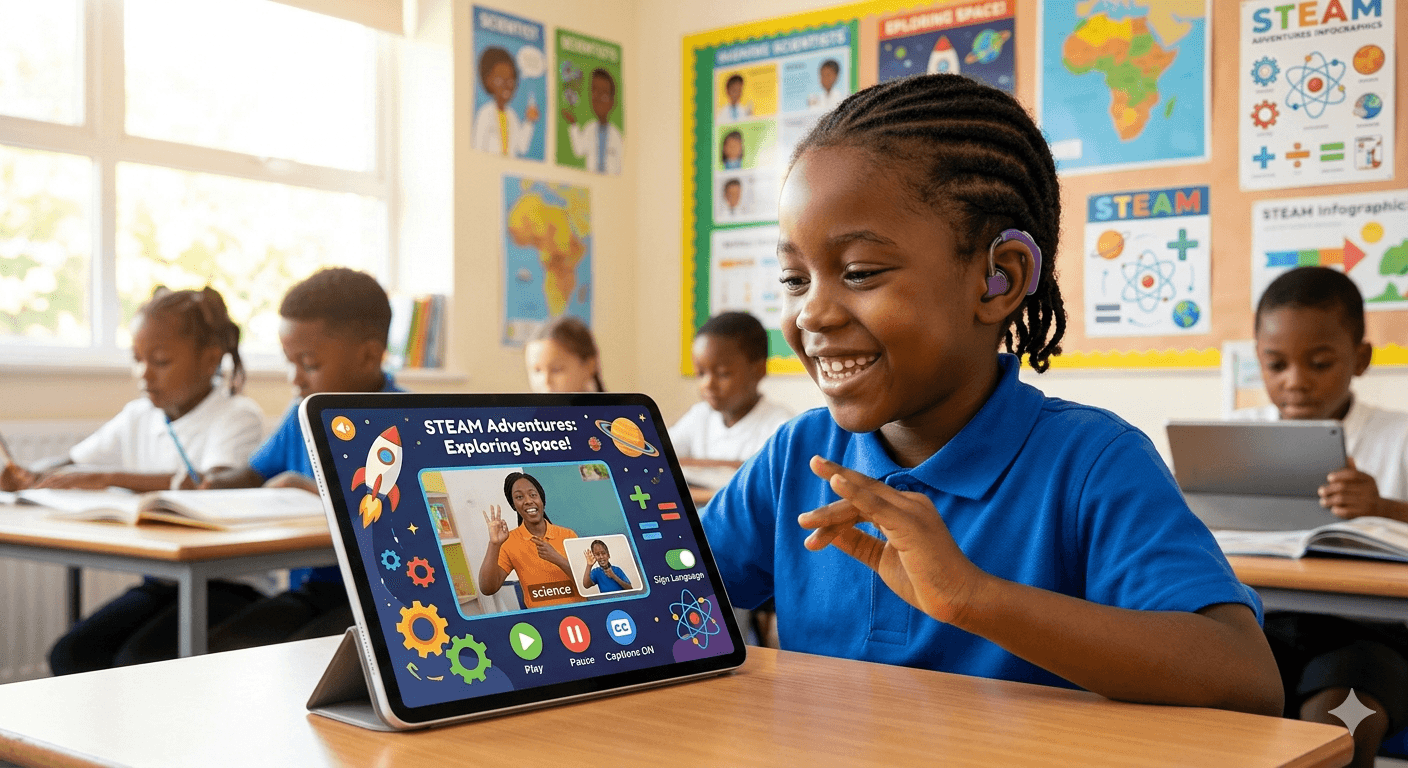
Questions become experiments
STEM Education for Deaf School Students
School-based science, technology, engineering, and mathematics activities that make abstract ideas visible, practical, and connected to the world students already know.
- 4 skill areas
- 1 practical projects
- Accessible by design
The learning experience
Access changes how a lesson is built.
Designed for: Deaf primary and secondary school students, with activities adapted to age, prior learning, available equipment, and the school curriculum.
In many classrooms, a student has to look at the interpreter, copy from the board, follow a demonstration, and take notes at the same time. Missing one step can make the whole experiment feel confusing.
We separate those moments. First everyone sees the idea. Then the group discusses it in sign language. Instructions stay visible while students build, measure, test, make mistakes, and explain what changed.
A correct answer matters, but so does the route to it: asking a good question, making a prediction, keeping a record, working with a partner, and trying again when the first design fails.
Skills in practice
Learning is easier to understand when you can see it happening.
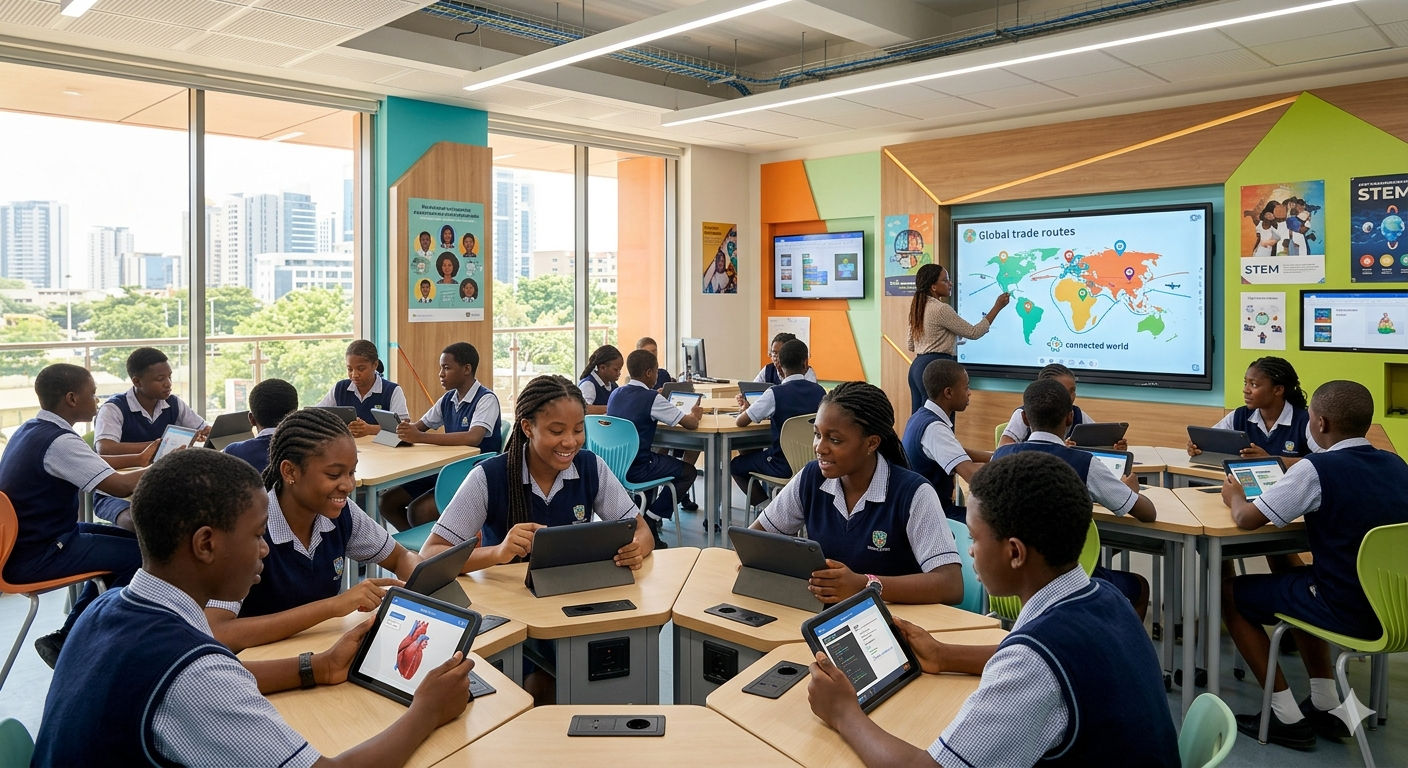
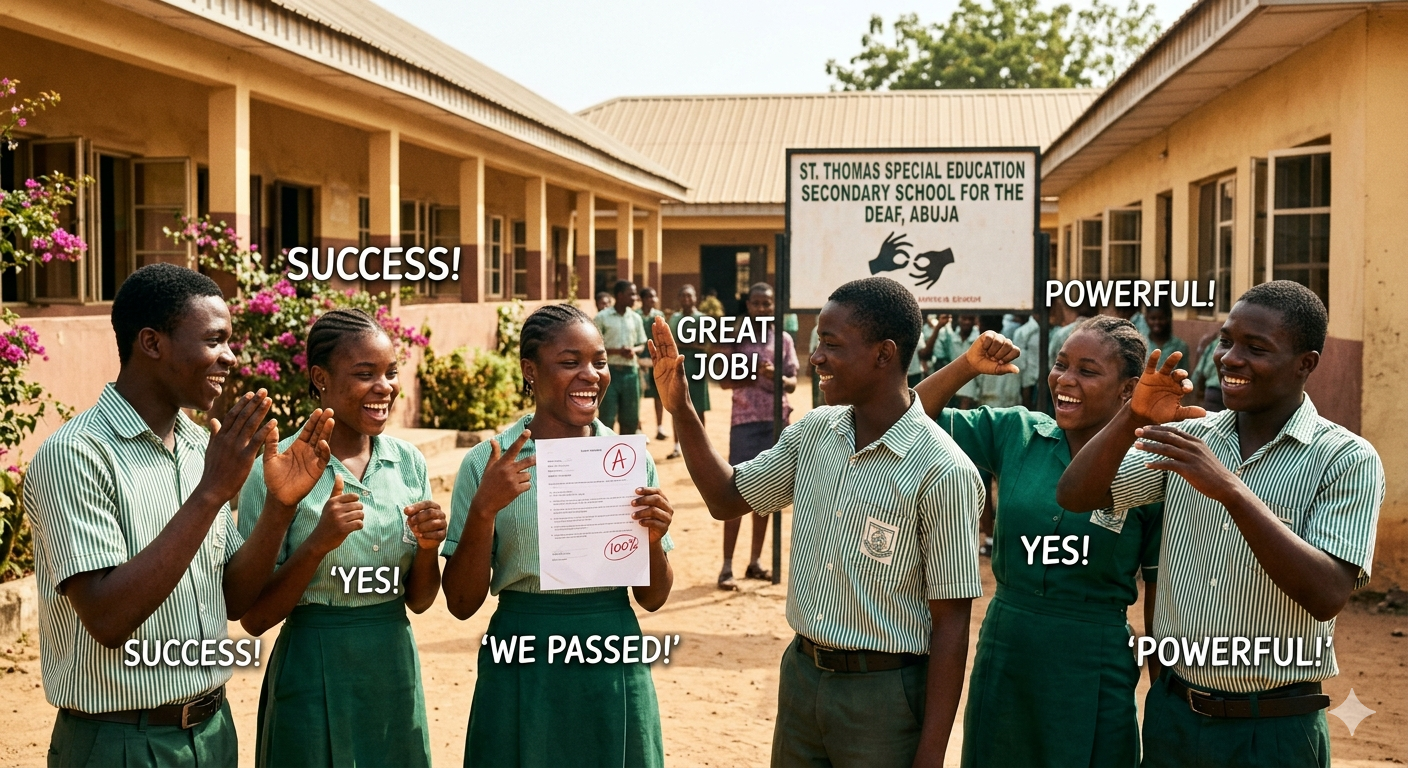
These photographs come from TIDI programmes and show the visual, practical, and collaborative learning behind this pathway.
 View larger
Curiosity and questioning
A STEM activity begins with what students notice, what they want to know, and what they think may happen next.
 View larger
Testing ideas
Visible instructions and hands-on materials let students build, measure, compare results, and try again.
 View larger
Learning through teamwork
Students discuss ideas in sign language, divide practical roles, and explain the evidence behind their decisions.
What learners work on
Specific skills, taught in context.
Scientific practice
- Observation and questioning
- Prediction and fair testing
- Measurement
- Recording evidence
- Explaining results
Computational thinking
- Breaking problems into steps
- Patterns and algorithms
- Block-based coding
- Debugging
- Creative computing
Engineering and making
- Design briefs
- Building simple models
- Testing and improving
- Basic electronics or physical computing when equipment is available
- Team roles and safe tool use
Data and mathematics
- Collecting data
- Tables and charts
- Estimation
- Comparing results
- Using evidence to support a conclusion
Learning by making
Work a learner can explain, improve, and show.
- Program an interactive story or simple game Design and test a structure from everyday materials Collect and visualise data from the school environment Prototype a solution to a problem identified by students
How access is built in
Communication is part of the teaching plan.
- Sign-language-first classroom communication Vocabulary introduced before dense technical explanations Visual instructions kept in view throughout an activity Hands-on materials learners can inspect directly Assessment through demonstrations, projects, signed explanations, and written work
Where this can lead
Students gain a stronger base for school STEM subjects, see Deaf adults connected to technical work, and begin to recognise computing and engineering as fields in which they can participate—not spaces reserved for somebody else.
Talk to TIDI about this pathway